One Mark. Nine Doors.
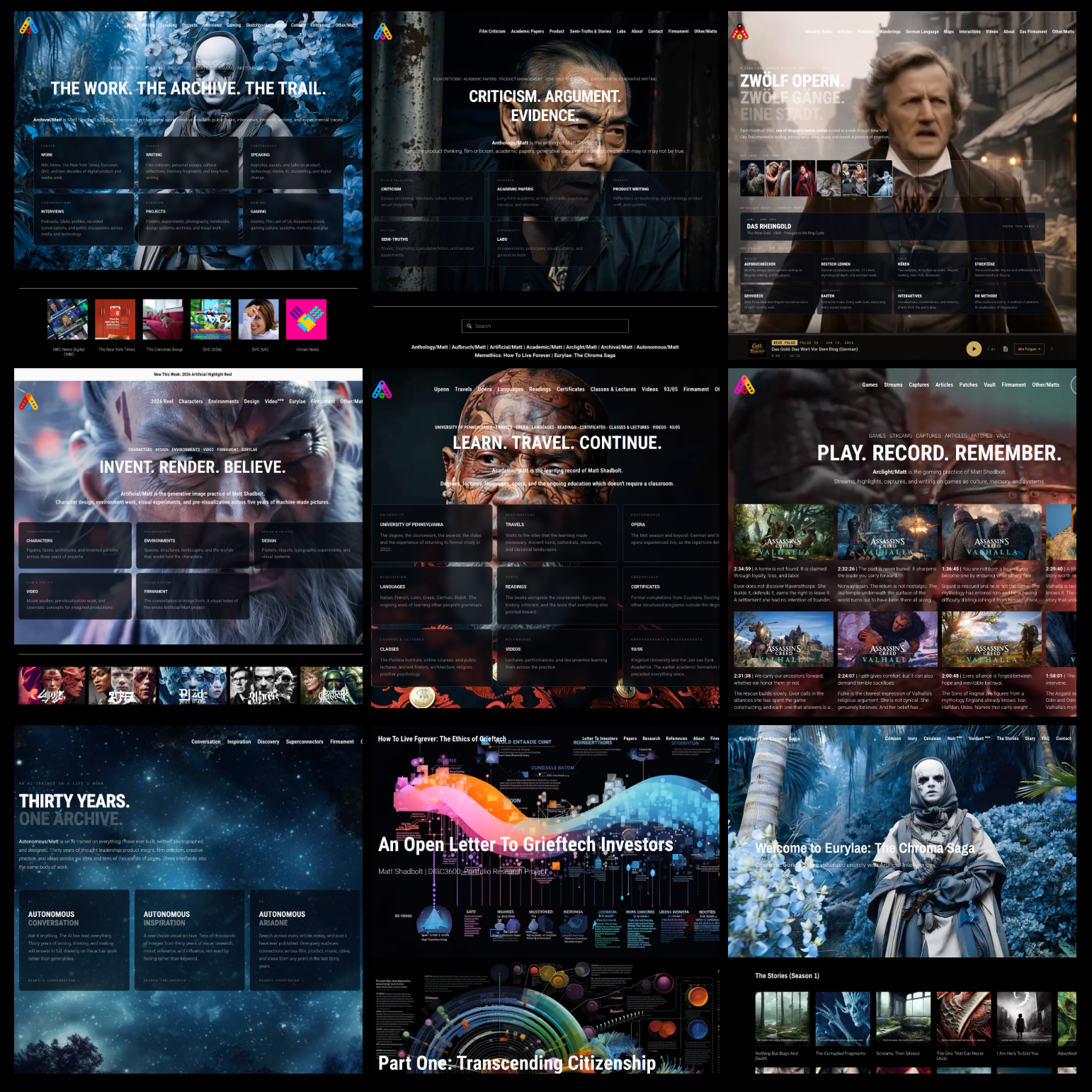
Every property — Academic, Anthology, Aufbruchmatt, Arclight, Archival, Artificial, Memethics, Eurylae, Autonomous — is a different room in the same house. The content and tone of each practice are distinct; the architecture that lets you walk between them is not. This page documents that shared architecture.
Mark
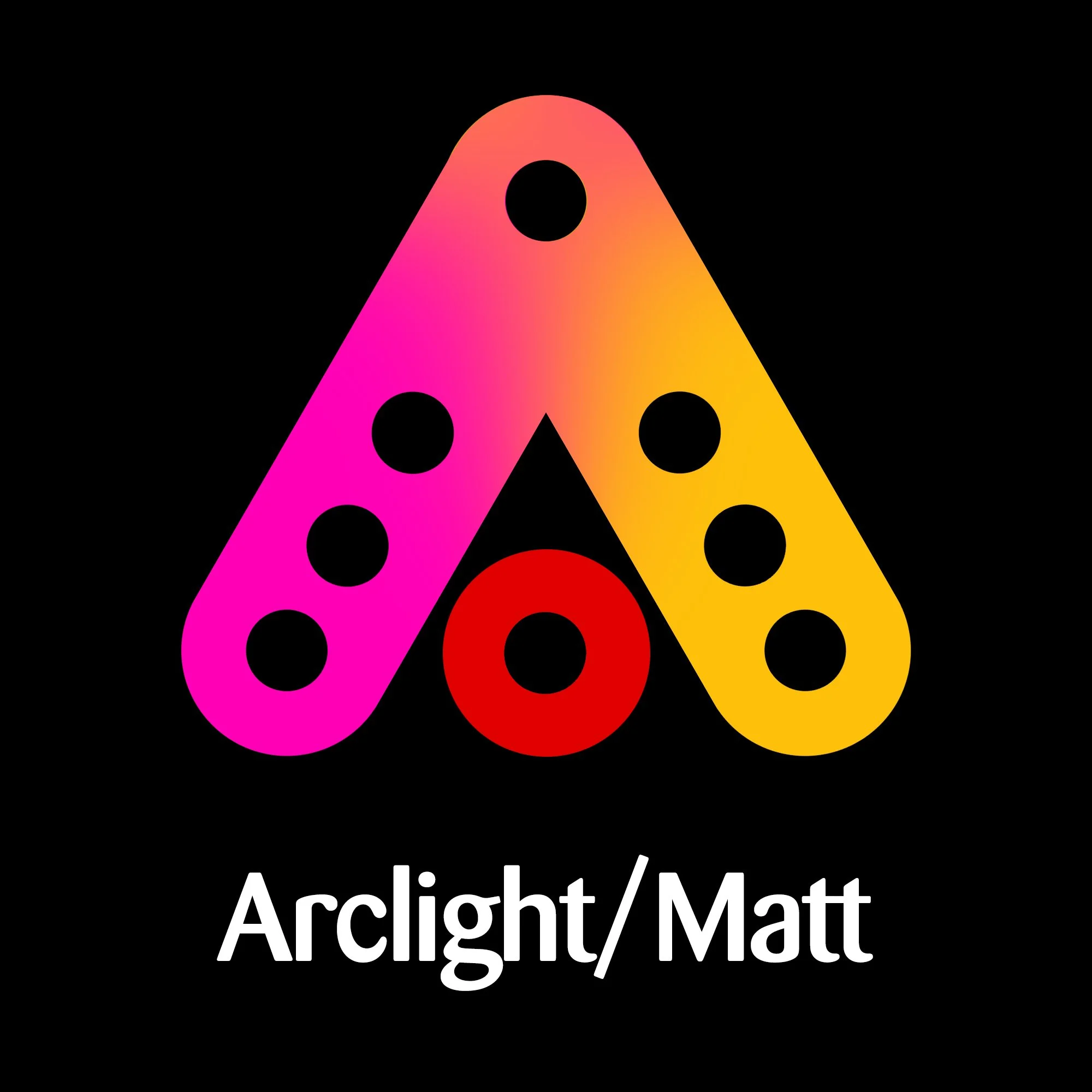
Three rounded capsule "fingers" of uneven height, fanned from a single base point, each perforated with a row of drilled holes, plus one loose ring floating just below the cluster. The geometry never changes — same fan angles, same hole rhythm, same stray ring — only the palette is re-colored per site as a lightweight signal of "which room you're in."
Rule: never change the fan angles, the bar-height order (short · tall · medium), the hole rhythm, or the stray ring — only the four fill colors.
Memethics & Eurylae
The two narrative / research sub-projects — How To Live Forever and Eurylae: The Chroma Saga — drop the mark for a plain text wordmark in the same header position. Treat this as the one sanctioned exception: fiction and speculative research projects may run text-only; every practice hub runs the mark.
Color
Structural chrome (nav, cards, rules, body copy) is always near-black / white / gray. Color lives only in the hero photography and the logo mark — never in UI elements like buttons, links, or borders.
#0A0A0A#141414#F5F5F3#A3A3A0#6B6B68white / 14%Type
Three roles, always the same order on the page: a small-caps breadcrumb, a huge display headline, and a quiet body sentence.
The headline pattern is always three short imperative or noun phrases, each ending in a period, e.g. "Learn. Travel. Continue." / "Invent. Render. Believe." / "Play. Record. Remember." This is the single most recognizable device in the system — protect it.
Navigation
Top-right text nav lists every section of that site by name. Two items are constant across all nine sites and always sit last, in this order:
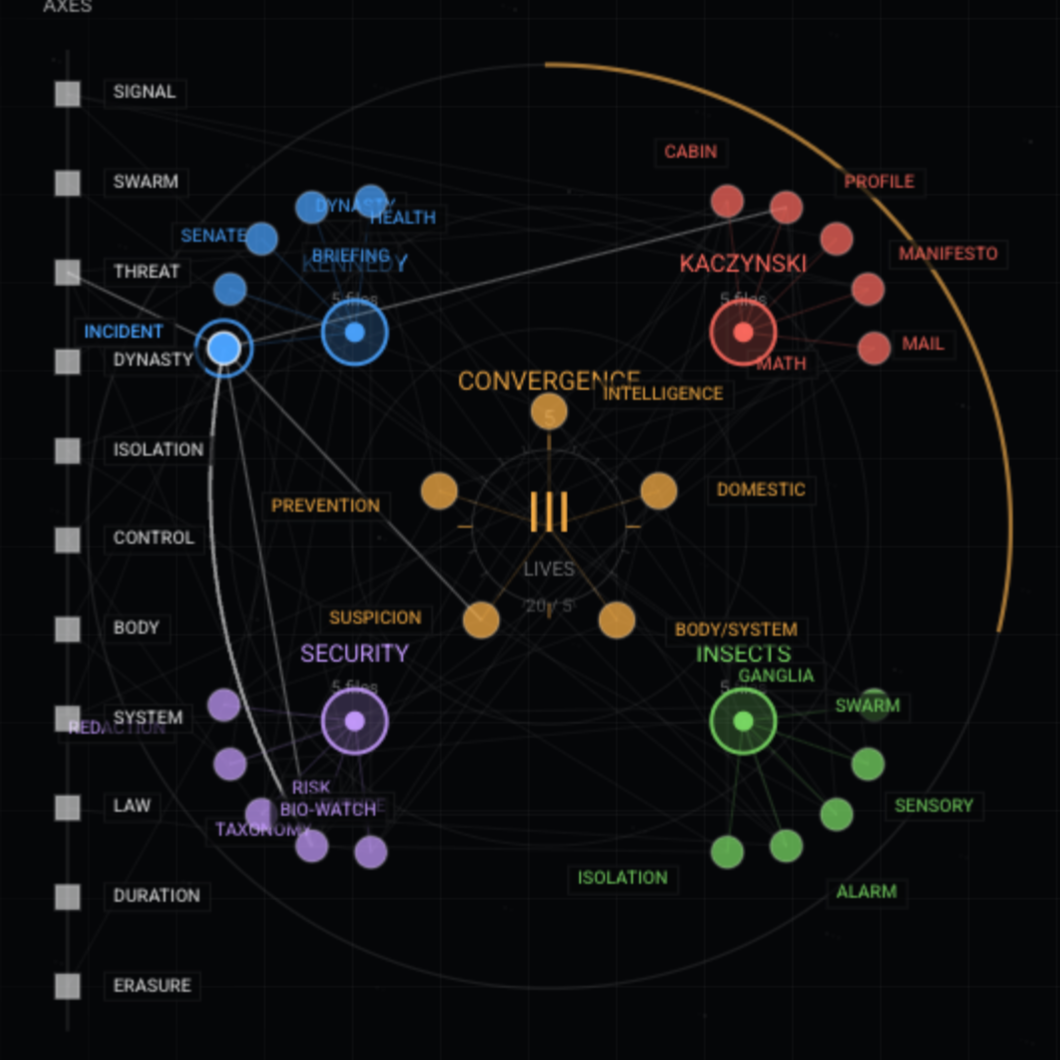
Firmament = the meta-index / constellation view across every site.
Other/Matts = the cross-links out to the sibling sites.
Together they're the only way the nine sites acknowledge each other in primary nav — the rest of each menu is 100% local to that property.
Hero
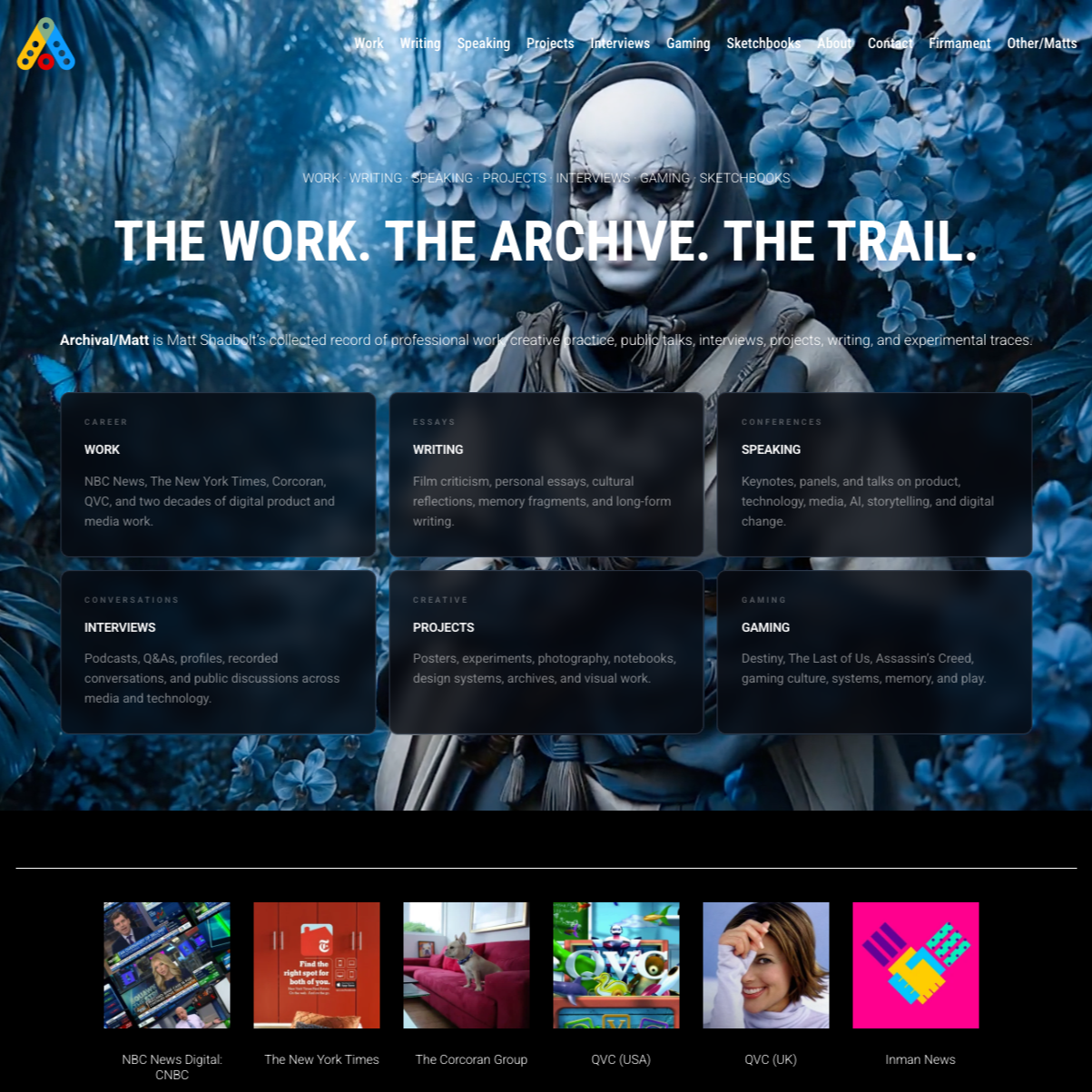
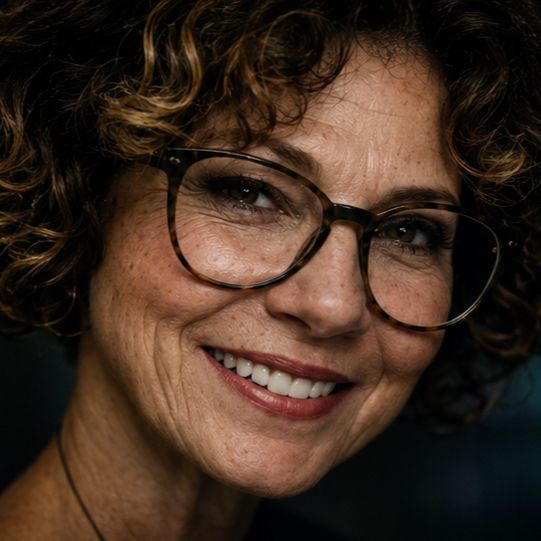
Full-bleed, heavily darkened photographic or generated image, cropped tight on a face or figure. Text sits directly on the image with no card behind it — contrast comes from darkening the photo, not from a scrim panel.
1 · Breadcrumb
Small-caps list of every section, dot-separated.
2 · Headline
The three-phrase display line.
3 · Lede
Bold site name + one or two plain sentences of scope.
Section Grid
Below the hero, every home page resolves into a 3-column grid of dark cards — one card per section in the nav. Each card is identical in structure: eyebrow, title, one-sentence description.
Section Name
One plain sentence describing what lives here — never marketing copy, always descriptive.
Section Name
Same length, same tone, same structure as every other card on the page.
Section Name
Cards touch with a 1px hairline between them — no gaps, no shadows, no rounded corners.
Cross-Site Footer
Where present, the footer is the one place all nine sites are named together, plus a single search field. Kept minimal — a rule, a search bar, a line of links.
Voice
Every site describes itself in the same grammatical pattern: "[Site Name] is the [practice] of Matt Shadbolt." followed by a plain-spoken scope sentence.
- Do
State what the practice is, plainly: "the gaming practice of Matt Shadbolt," "the generative image practice of Matt Shadbolt."
- Don't
Sell it. No "unlock," "explore a world of," or exclamation points anywhere in the system.
- Do
Let card descriptions name concrete contents: "Italian, French, Latin, Greek, German, Dutch," not "a journey through language."
- Don't
Use numbered steps or badges unless the content is a genuine sequence — most sections aren't.